How to Protect Exterior Foundation Walls From Water
Think waterproofing is only needed when you see water? Learn why this belief can lead to costly damage. Discover how proactive measures protect your GTA home from hidden moisture issues.
A damp basement often starts with a small sign. You may notice a musty smell, a dark patch near the floor, or a thin crack along the wall. Many homeowners ignore these signs because the basement still looks usable. The problem usually gets worse after heavy rain, spring snowmelt, or sudden temperature changes.
Basement water problems are common across Toronto, Mississauga, Brampton, Vaughan, Oakville, Scarborough, and other parts of the GTA. Older foundations, clay soil, blocked drains, short downspouts, and worn waterproofing materials all play a role.
This Basement Waterproofing: An Educational Guide for GTA Homeowners explains where basement water comes from, what repair methods contractors use, and what you should check before paying for any work.
Homes in the Greater Toronto Area deal with changing weather throughout the year. Rainwater soaks into the soil during warmer months. Snow builds up around the house in winter and melts in spring. When the ground becomes full of water, pressure builds against the foundation.
Water then looks for an easy way inside.
It may enter through:
Homes built several decades ago may have waterproofing systems that have weakened, shifted, cracked, or become blocked.
A basement does not need to flood before it needs attention. Small signs can reveal a bigger problem behind the wall or below the floor.
A Smell That Does Not Go Away
A damp, earthy smell often means moisture is trapped behind drywall, carpet, insulation, boxes, or wooden framing.
White Powder on Concrete Walls
White marks on basement walls are called efflorescence. They appear when water moves through concrete and leaves salt deposits behind.
Cracks Near Windows or Corners
Small cracks can grow during freeze-and-thaw cycles. Rainwater may pass through them during storms.
Wet Areas Near the Floor
Water near the edge of the basement floor may point to pressure below the slab or a blocked drainage system.
Peeling Paint and Soft Drywall
Paint may bubble or flake when moisture sits behind it. Drywall can also feel soft, swollen, or stained.
Mould Around Baseboards
Mould often appears in dark corners, behind furniture, under carpet, or near window wells.
The leak inside your home may begin several feet away from the visible wet spot. Water can travel along the foundation before it finds an opening.
Common causes include:
A proper inspection should identify the source before repair work begins.
Interior waterproofing manages water from inside the basement. Contractors often use this method when outside excavation is difficult or when water enters from beneath the floor.
Interior Drainage Channel
The contractor cuts a narrow strip of concrete around the basement edge. A drain pipe is installed beside the footing. Water flows into the pipe and moves toward the sump pit.
This method can help when water appears where the floor meets the wall.
Sump Pump System
A sump pump collects groundwater and sends it away from the foundation. Homeowners in areas with frequent power cuts may also choose a battery backup pump.
Crack Injection
Polyurethane injection can seal active leaks in foundation cracks. The material expands inside the opening. Epoxy may be used where a strong repair bond is needed.
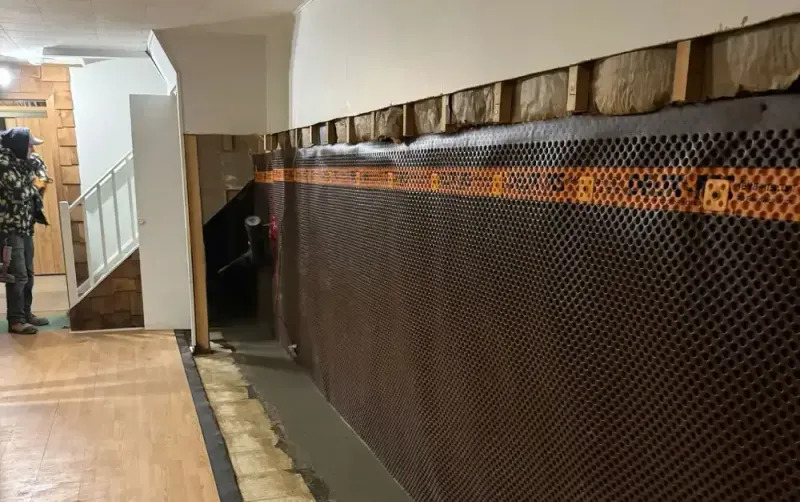
Interior Wall Membrane
A membrane fixed to the wall directs moisture down into the drainage system. It can help protect finished basement walls from future dampness.
Exterior waterproofing blocks water before it enters the foundation. This method requires digging beside the outside wall.
The work often includes:
Exterior work may be suitable when water comes through several sections of the wall or when the old outside membrane has failed.
A contractor such as 4 Waterproofing Less may inspect the wall condition, drainage system, cracks, and outside grading before suggesting interior or exterior work.
The right method depends on where the water starts.
Interior waterproofing may suit your home when:
Exterior waterproofing may suit your home when:
Do not choose a method based only on price. A cheap repair that misses the source may fail during the next major storm.
Homeowners can lower the amount of water collecting near basement walls.
Start with these checks:
These steps may not fix an existing leak, but they can reduce pressure around the foundation.
Basement waterproofing prices in the GTA depend on the type of repair, wall length, excavation depth, access, soil condition, foundation material, and basement finish.
Exterior work may cost more because it involves digging, wall cleaning, membrane installation, drainage repair, gravel, and backfilling.
Interior work may also cost more when contractors need to remove finished flooring, drywall, cabinets, or insulation.
Ask for a written quote that covers:
Yes. Even a narrow crack can let water enter during heavy rain or snowmelt.
It can work well when water enters through the floor edge or below the basement slab.
No. Paint may cover damp marks, but it does not repair drainage problems or foundation cracks.
Check it every few months and before spring snowmelt or heavy rain.
Yes. Stopping the moisture source can reduce conditions that allow mold to grow.


Think waterproofing is only needed when you see water? Learn why this belief can lead to costly damage. Discover how proactive measures protect your GTA home from hidden moisture issues.
Think waterproofing is only needed when you see water? Learn why this belief can lead to costly damage. Discover how proactive measures protect your GTA home from hidden moisture issues.
Think waterproofing is only needed when you see water? Learn why this belief can lead to costly damage. Discover how proactive measures protect your GTA home from hidden moisture issues.