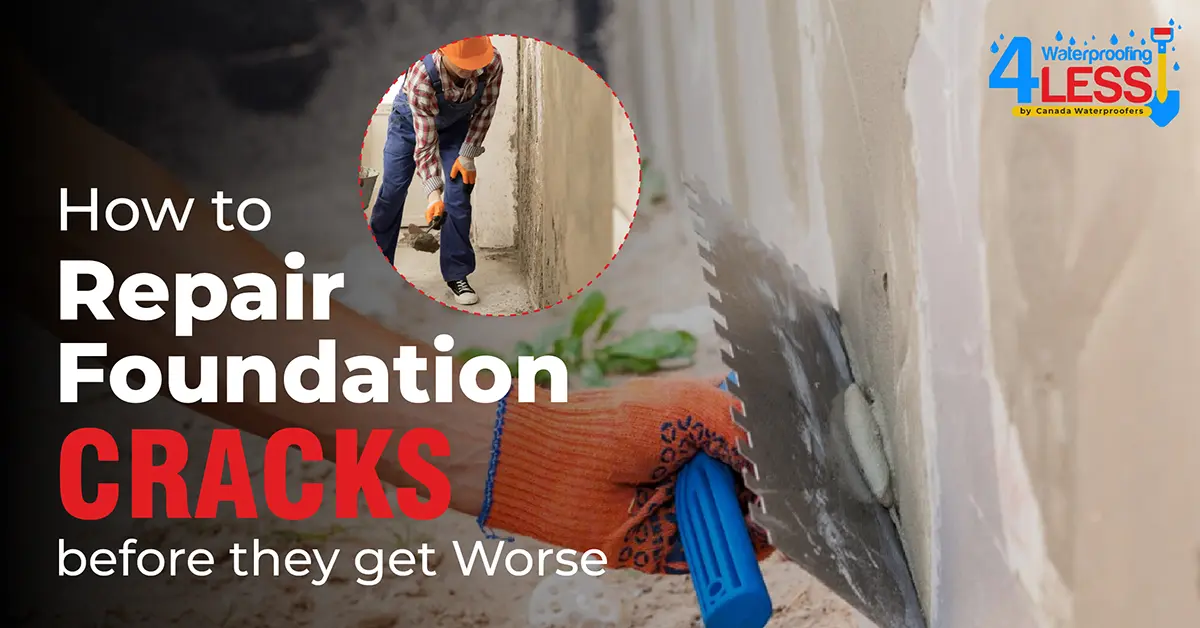
How to Repair Foundation Cracks Before They Get Worse
Think waterproofing is only needed when you see water? Learn why this belief can lead to costly damage. Discover how proactive measures protect your GTA home from hidden moisture issues.
After a rainstorm, water around a foundation may seem harmless, but repeated exposure can slowly lead to bigger problems. Masonry and concrete can soak up water and small cracks give water a direct route to the basement. Over time you may notice damp walls, peeling finishes, the smell of dampness or water on the basement floor.
Water proofing exterior foundation walls is a process that begins outside the house. Good drainage, cracks repaired, correct grading and a proper waterproof barrier all work together to keep the moisture away. This type of protection is particularly helpful if you live in an area with a lot of rain, melting snow, clay soils or a high water table. Exterior waterproofing also helps limit freeze-thaw damage and pressure from groundwater against the wall.
A lasting solution usually involves more than coating the visible part of a wall. Effective exterior waterproofing starts by finding where the water comes from and stopping it before it reaches the foundation.
For many homes, the work may include exposing the wall, cleaning it, repairing cracks, applying a waterproof membrane, improving drainage, and correcting soil grading.
When water has already reached the basement, basement waterproofing may also be needed to deal with moisture from both outside and inside the property.
Rainwater should flow away from your home. Problems begin when soil slopes toward the building, downspouts release water close to the wall, or underground drainage cannot carry enough water away.
Clay soil retains water longer than sandy soil, which increases the weight on the foundation. Groundwater hydrostatic pressure can also force moisture into cracks and porous concrete.
Homes with ongoing drainage problems may benefit from french drain installation or drain repair & replacement to move water away before it collects beside the structure.
Before waterproofing foundation walls, check the area carefully. Look for:
Cracks and holes should be repaired before a coating or membrane goes on. Waterproofing over loose concrete, dirt, or damaged material can reduce how well the system holds. Proper surface preparation is an important part of exterior wall waterproofing.
Where cracks are already allowing water inside, foundation repair or leaky basement repair may need to come first.
If you are researching how to waterproof foundation walls, the basic process normally follows a clear order.
First, contractors excavate soil beside the affected wall so the foundation becomes accessible. They clean the surface and remove loose material. Existing cracks, gaps, and damaged sections are then repaired.
Once the wall is prepared, a waterproof coating or membrane is applied to provide a continuous barrier. At the site conditions, a drainage or protection board can be installed over it before filling the excavation again.
This type of exterior foundation waterproofing prevents groundwater from coming in contact with the interior wall rather than waiting for moisture to enter the basement.
Homeowners often search for the best exterior foundation waterproofing products, but no single product suits every building.
The choice of material depends on type of wall, soil, drainage, water pressure and condition of foundation. Poured concrete, block walls, stone foundations and older masonry may require different preparation and waterproofing systems.
When considering how to seal a foundation, focus on full coverage rather than simply filling the visible crack. The waterproof layer needs to protect the surrounding area where moisture may travel through porous masonry.
A waterproof wall works better when less water reaches it in the first place.
Make sure gutters stay clear and extend downspouts well away from the home. Soil should slope away from the building instead of creating a low spot beside it. Damaged exterior drains should also be corrected quickly.
If groundwater is still a problem for your property, then a sump pump installation may be an extra layer of protection, pumping out any water that has accumulated before it can rise into your basement.
These systems are frequently used in conjunction with the basement waterproofing in Toronto, Hamilton, Mississauga, Oakville, Burlington and St. Catharines where seasonal rain and snow melt can place additional stress on the residential drainage systems. Waterproofing4Less lists these cities among its service areas.
Basement windows can become another entry point when water collects around them. Poor grading, clogged window well drains, or missing covers can allow rainwater to sit directly beside the window frame.
Proper window well installation creates space between the window and surrounding soil and helps direct water toward a drainage system rather than into the basement. The company describes window wells as a way to keep soil, debris, and water from pressing directly against basement windows.
A small surface crack may not always mean major structural trouble, but repeated leaking deserves attention. Water stains that return after rain, widening cracks, bowed walls, standing basement water, or persistent dampness can point to drainage or foundation problems that need a closer inspection.
Good exterior basement waterproofing should deal with the source of the water, not simply hide stains indoors. Combining wall protection, drainage, crack repair, grading, and suitable waterproofing materials gives the foundation a much better chance of staying dry.
For homeowners dealing with ongoing foundation leaks or drainage problems, Waterproofing4Less provides exterior and interior waterproofing, sump pumps, backwater valves, foundation repairs, French drains, window wells, and drain services across its listed GTA service areas.
Repair cracks, clean the wall, apply a suitable waterproof membrane, and provide proper drainage around the foundation.
It can stop many leaks by preventing groundwater from reaching and passing through the exterior foundation wall.
Improve grading, clean gutters, extend downspouts, and repair or install suitable drainage systems.
Yes. Cracks should first be properly repaired and then protected with an exterior waterproofing system.
Yes. A French drain can collect groundwater and direct it away from the foundation, reducing water buildup beside the wall.


Think waterproofing is only needed when you see water? Learn why this belief can lead to costly damage. Discover how proactive measures protect your GTA home from hidden moisture issues.
Think waterproofing is only needed when you see water? Learn why this belief can lead to costly damage. Discover how proactive measures protect your GTA home from hidden moisture issues.

Think waterproofing is only needed when you see water? Learn why this belief can lead to costly damage. Discover how proactive measures protect your GTA home from hidden moisture issues.