
How to Protect Exterior Foundation Walls From Water
Think waterproofing is only needed when you see water? Learn why this belief can lead to costly damage. Discover how proactive measures protect your GTA home from hidden moisture issues.
A clogged drain can turn a normal day into a messy one. The kitchen sink starts filling while you wash dishes, the shower water sits around your feet, or an unpleasant smell comes from the bathroom. Most drain problems do not happen suddenly. Grease, hair, soap, food particles, and dirt collect inside the pipe over time. The blockage becomes worse until water struggles to pass through. Before calling a plumber, you can try a few DIY Hacks to Fix a Clogged Drain at Home using common items already available in your kitchen or toolbox.
Start by looking at where the problem is happening. A kitchen sink usually gets blocked by grease, cooking oil, food scraps, tea leaves, coffee grounds, or dishwashing residue. Bathroom drains mostly collect hair, soap, shampoo, toothpaste, and body oil.
Run the tap for a few seconds and watch the water. If it drains slowly, the blockage may be small and close to the opening. If the water does not move at all, the clog may sit deeper inside the pipe.
You should also listen for gurgling sounds. These sounds often mean air is trapped behind the blockage.
Hot water is one of the first things worth trying, especially in the kitchen. It can loosen fresh grease and soften soap stuck inside the pipe.
Boil water and let it cool slightly if you have plastic pipes. Pour it down the drain slowly instead of emptying the whole kettle at once. Wait for about a minute and pour another small amount.
Try this two or three times.
Hot water may clear a light blockage, but it will not remove a thick lump of hair or a solid object. Avoid using boiling water if the sink has weak PVC joints because high heat may damage them.
Baking soda and white vinegar are useful for cleaning light dirt and reducing bad smells.
You need:
Remove standing water from the sink first. Pour the baking soda into the drain, followed by the vinegar. Cover the opening with a stopper or damp cloth and leave it for 15 to 20 minutes.
After that, rinse the drain with warm water.
The bubbling action may loosen soft waste around the pipe walls. This method works better on a slow drain than a completely blocked one.
Hair is usually the main reason a shower or bathroom sink stops draining properly. In this case, pouring liquid into the drain may not be enough. You need to pull the hair out.
Remove the drain cover and shine a torch inside. Use a plastic drain strip, small drain snake, or a bent wire hook. Push the tool down slowly, twist it, and pull it back.
You may bring out a thick mix of hair and soap. Wear gloves and place the waste directly into a rubbish bag. Do not push it back into the pipe.
Once the hair is removed, rinse the drain with warm water.
A plunger can move a soft blockage by creating pressure inside the pipe. The trick is getting a tight seal.
Put enough water in the sink to cover the rubber part of the plunger. Place it directly over the drain and press down firmly. Move it up and down several times without lifting it away from the opening.
For a bathroom sink, cover the overflow hole with a wet cloth. This stops air from escaping and gives the plunger more pressure.
After 15 to 20 pushes, lift the plunger and check the water flow. Repeat the process if needed.
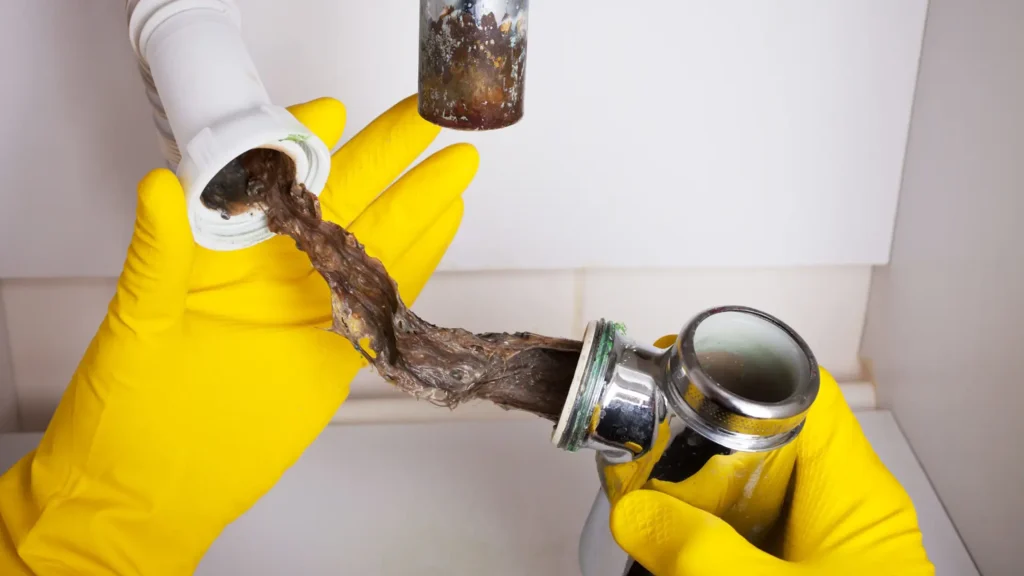
If the clog remains, check the curved pipe under the sink. This section is often called a P-trap or U-bend. Food waste, grease, hair, and small objects can collect there.
Place a bucket under the pipe before opening it. Loosen the fittings by hand or use adjustable pliers if they are tight. Remove the trap carefully because dirty water may spill out.
Clean the inside with warm water and an old brush. Put the pipe back in place and tighten the fittings. Run the tap and check for leaks around the joints.
Dish soap can help when the kitchen drain is slow because of fresh grease.
Pour a small amount of dishwashing liquid into the drain and leave it for around ten minutes. Follow it with hot water. The soap may break down oily waste and allow it to move through the pipe.
This method is most useful when the grease has not hardened completely. Older grease clogs often need a drain snake or professional cleaning.
Strong drain cleaners can burn the skin, damage old pipes, and create harmful fumes. Mixing two cleaners can make the situation even more dangerous.
Never mix bleach with vinegar, ammonia, toilet cleaner, or another drain product. Open the windows if you use any chemical cleaner and follow the label instructions carefully.
If you have already poured chemicals into the drain and later call a plumber, tell them what you used. This can protect them from chemical splashes.
A few changes in daily habits can make a big difference.
Grease may look harmless while it is warm, but it becomes sticky after cooling and catches other waste.
Place a hair catcher over the shower drain and empty it after bathing. Clean the drain cover every week and remove hair before it enters the pipe.
Rinse the drain with warm water after washing your hair. You can also use baking soda and vinegar once a month to control soap residue and odour.
Regular cleaning takes only a few minutes and reduces the chance of a serious blockage.
Some clogs sit too deep inside the plumbing system for household methods.
Call a plumber if:
These signs may point to a blocked sewer line, damaged pipe, tree roots, or poor drainage around the property. If water is also entering the basement, 4 Waterproofing Less can inspect drainage and moisture issues before they lead to wall, floor, or foundation damage.
Start with hot water, then try baking soda and vinegar. Use a plunger if the water still drains slowly.
No. Boiling water may damage weak plastic pipes. Use hot or warm water if you are unsure.
Hair, soap, shampoo, and dirt often collect below the drain cover and form a thick blockage.
Clean drain covers weekly and flush kitchen and bathroom drains once a month.
Call a plumber when several drains block together, water backs up, or the same problem keeps returning.


Think waterproofing is only needed when you see water? Learn why this belief can lead to costly damage. Discover how proactive measures protect your GTA home from hidden moisture issues.
Think waterproofing is only needed when you see water? Learn why this belief can lead to costly damage. Discover how proactive measures protect your GTA home from hidden moisture issues.

Think waterproofing is only needed when you see water? Learn why this belief can lead to costly damage. Discover how proactive measures protect your GTA home from hidden moisture issues.