How to Protect Exterior Foundation Walls From Water
Think waterproofing is only needed when you see water? Learn why this belief can lead to costly damage. Discover how proactive measures protect your GTA home from hidden moisture issues.
leaks often appear after several hours of rain, but the water on the floor is only the visible part of the problem. The real issue may begin in the soil outside your home. When the ground becomes soaked, water starts pressing against the foundation. That pressure can force moisture through cracks, joints, and small openings in the concrete.
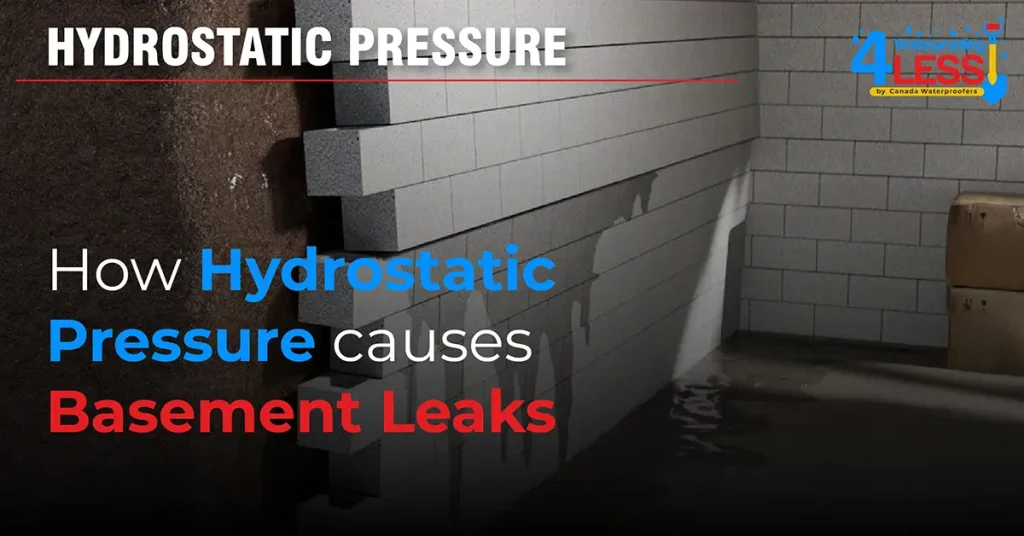
Knowing how hydrostatic pressure causes basement leaks can help homeowners spot early warning signs and take action before the damage spreads.
Hydrostatic pressure is the force created by water that has collected in the soil around a foundation. When rainwater or melting snow sinks into the ground, the soil absorbs it. Once the soil becomes too wet, the extra water has nowhere to go.
It then pushes against the basement walls and floor.
The pressure may remain low during dry weather, but it can rise quickly after:
Basement walls may look solid, but concrete has pores, seams, and weak spots. Water can use these small openings to enter the home.
Water does not always pour through a large crack. In many homes, it enters slowly.
You may first notice a damp patch near the floor, a musty smell, or white marks on a concrete wall. These signs often mean moisture is already moving through the foundation.
Water commonly enters through:
As the pressure outside increases, even a tiny gap can allow water to pass through.
To understand how hydrostatic pressure causes basement leaks, think of the foundation as a barrier holding back wet soil. During dry weather, the pressure against that barrier may stay low. After heavy rain, the soil fills with water and becomes much heavier.
That water pushes from the outside while the basement remains dry inside. The difference in pressure forces moisture toward the lower-pressure area, which is usually the basement.
The water may seep through a crack, move through porous concrete, or rise from beneath the floor. In some homes, it appears where the floor and wall meet. This area is a common weak point because it connects two separate sections of the foundation.
Not every property has the same drainage conditions. Some homes face a higher risk because of the land, soil, or foundation design.
Poor Yard Slope
The ground around a home should slope away from the foundation. When it slopes inward, rainwater runs toward the basement walls.
Clay Soil
Clay soil holds water for a long time. It also expands when wet, which can add more force against the foundation.
Short Downspouts
A short downspout releases roof water close to the house. During a storm, hundreds of litres of water may collect beside the foundation.
Blocked Gutters
Leaves, dirt, and debris can stop gutters from draining. Water then spills over the edge and soaks the ground near the home.
High Water Table
Some homes sit in areas where groundwater remains close to the surface. These basements may face water pressure even when there has not been much rain.
Hydrostatic pressure may leave several clues before a major leak begins.
Watch for:
White powder on concrete is called efflorescence. It forms when water passes through masonry and leaves mineral deposits behind. It often shows that moisture has been moving through the wall.
A small basement leak may not seem serious at first, but repeated water entry can create larger problems.
Moisture can damage drywall, flooring, insulation, wooden framing, furniture, and stored items. It can also create the right conditions for mould and mildew.
Water pressure may also make existing foundation cracks worse. Over time, the cracks can widen and allow more water to enter.
A finished basement may need major repairs if water reaches:
The longer the leak continues, the more expensive the repair may become.
Homeowners can reduce hydrostatic pressure by moving water away from the foundation.
Start with the outside of the property.
Clean the Gutters
Remove leaves and dirt so rainwater can flow freely.
Extend the Downspouts
Downspouts should carry water several feet away from the house.
Correct the Yard Grade
Add soil where needed so the ground slopes away from the foundation.
Repair Visible Cracks
Small cracks can grow over time. Sealing them early may help stop water entry.
Keep Window Wells Clear
Leaves and standing water inside a window well can lead to basement leaks.
Check the Sump Pump
A working sump pump removes groundwater before it rises beneath the basement floor.
Outdoor drainage changes can help, but they may not solve every leak. Homes with regular seepage may need a waterproofing system.
A contractor may suggest:
The right repair depends on where the water is entering and what is causing the pressure.
A team such as 4 Waterproofing Less can inspect the basement, foundation walls, soil conditions, and drainage setup before recommending a repair. This matters because covering a damp wall with paint will not stop groundwater from pushing against it.
A quick check after heavy rain can reveal problems early.
Walk around the outside of the home and look for puddles near the foundation. Check whether the gutters are overflowing. Inside the basement, look near corners, windows, pipes, and the floor edge.
You should also check for smells. A basement may have hidden moisture even when the walls look dry.
Yes. Water can move through small pores, cracks, and joints in concrete when the pressure outside becomes high.
Heavy rain fills the surrounding soil with water, which raises pressure against the foundation.
A sump pump helps remove groundwater from below the basement floor and can reduce the chance of water entering.
Waterproof paint may hide minor dampness, but it usually does not fix the pressure or drainage problem outside.
Yes. Small cracks can widen and become entry points for water, especially during wet weather.


Think waterproofing is only needed when you see water? Learn why this belief can lead to costly damage. Discover how proactive measures protect your GTA home from hidden moisture issues.
Think waterproofing is only needed when you see water? Learn why this belief can lead to costly damage. Discover how proactive measures protect your GTA home from hidden moisture issues.
Think waterproofing is only needed when you see water? Learn why this belief can lead to costly damage. Discover how proactive measures protect your GTA home from hidden moisture issues.