How to Protect Exterior Foundation Walls From Water
Think waterproofing is only needed when you see water? Learn why this belief can lead to costly damage. Discover how proactive measures protect your GTA home from hidden moisture issues.
A basement leak often starts quietly. It may show up as a damp corner, a faint smell, a small crack, or a dark patch near the floor. At first, it may not look serious. The basement may still feel dry most of the time. Then one heavy rain comes, water starts spreading, and the problem becomes much harder to ignore.
That is why Proactive Basement Waterproofing in Toronto & GTA makes sense. Instead of waiting for a flooded basement, homeowners can deal with cracks, drainage trouble, and moisture before they cause major damage.
Toronto homes face rain, snow, freezing weather, and wet soil. All of this puts pressure on basement walls. Over time, even a small weak spot can allow water to enter.
The ground around a house holds water after rain or melting snow. When the soil becomes too wet, the water pushes against the foundation.
If the basement wall has a crack, weak joint, damaged coating, or gap around a pipe, water may find its way in. It can also enter near basement windows or through the joint where the floor meets the wall.
Older homes often have another problem. Their drainage systems may be worn, blocked, or broken. Weeping tiles can fill with dirt. Downspouts may release water too close to the house. The soil around the property may also slope toward the foundation.
Common reasons include:
The source of the leak matters. A wall crack needs one type of repair. A drainage problem needs another.
A basement does not need to flood before it has a moisture problem. In many cases, the warning signs appear much earlier.
You may notice:
White marks on a wall often come from minerals left behind when water moves through concrete. Peeling paint may also mean moisture is sitting behind the surface.
These signs should not be covered with fresh paint or wall panels. That may hide the issue for a while, but the water can still remain behind the wall.
Waiting can make a small repair much more expensive.
A little seepage may only affect one corner today. After several storms, it may spread under the floor or behind drywall. Once that happens, homeowners may need to replace insulation, flooring, baseboards, and wall panels.
Early waterproofing can help:
A dry basement is also easier to use. Families often turn basements into bedrooms, gyms, offices, storage areas, or rental units. None of that works well when water keeps coming in.
Interior waterproofing handles water from inside the basement.
A contractor may remove a strip of concrete near the wall and install a drainage pipe below the floor. Water then moves toward a sump pit. The sump pump sends it away from the house.
A wall membrane may also be added. It helps guide water down into the drainage system instead of letting it spread across the floor.
Interior work may include:
This method is often useful when the outside wall is hard to reach. A driveway, deck, porch, or nearby building may block access.
Exterior waterproofing starts outside the home.
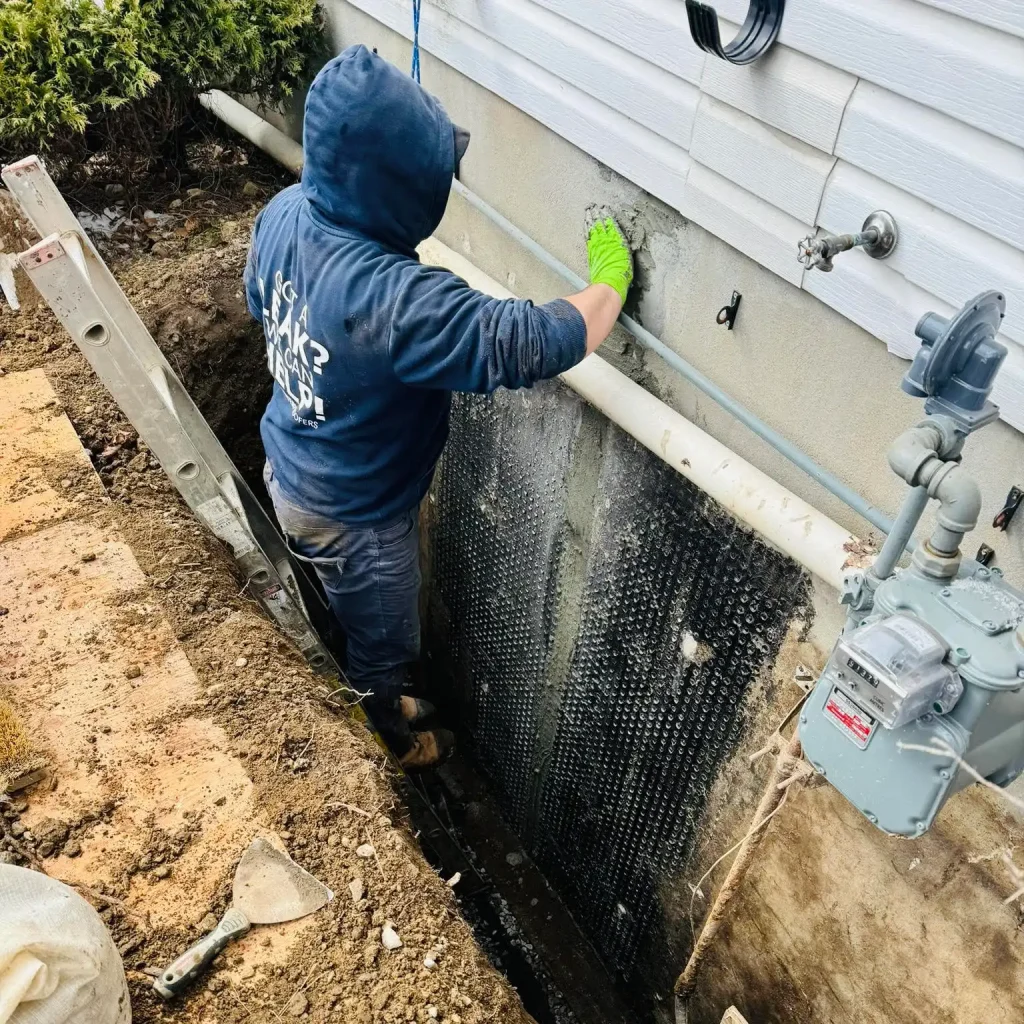
The contractor digs down beside the foundation and exposes the wall. The surface is cleaned, damaged areas are repaired, and a waterproof layer is applied. A drainage board may also be added.
If the weeping tile is old or blocked, it may need replacement. Gravel is then placed near the drainage pipe before the area is filled again.
Exterior work may involve:
This approach helps stop water before it reaches the inside wall.
Sometimes the problem starts above ground.
A downspout may empty water beside the foundation. A gutter may overflow. Soil may slope toward the house. A window well may fill during rain.
These issues can send a large amount of water toward the basement.
Homeowners should check:
Downspouts should carry water away from the house. The ground should also slope outward, not inward.
These checks may look basic, but they often make a real difference.
Water can travel before it becomes visible. A leak may begin at one point and appear several feet away.
That is why guessing does not work well.
A proper inspection should cover both the basement and the outside of the property. The contractor should look at cracks, drainage, grading, sump pumps, window wells, gutters, and signs of past repairs.
4 Waterproofing Less can inspect the source of the water and suggest a repair based on the actual condition of the home. The goal should be to stop the cause, not only cover the wet spot.
It means fixing moisture, cracks, and drainage trouble before serious leaking or flooding starts.
Book one when you notice damp smells, wall cracks, water marks, mould, peeling paint, or wet floors.
No. Some homes need exterior work, while others need both interior drainage and outside repairs.
Yes. Even a narrow crack can allow water through during heavy rain or snowmelt.
It helps remove collected water, but it should work with proper drainage and waterproofing.


Think waterproofing is only needed when you see water? Learn why this belief can lead to costly damage. Discover how proactive measures protect your GTA home from hidden moisture issues.
Think waterproofing is only needed when you see water? Learn why this belief can lead to costly damage. Discover how proactive measures protect your GTA home from hidden moisture issues.
Think waterproofing is only needed when you see water? Learn why this belief can lead to costly damage. Discover how proactive measures protect your GTA home from hidden moisture issues.